Salthouse 65 Window Conversion: From Framed Windows to Direct Glazing

Key points
- Integ Marine Group converted a Salthouse 65 motor yacht from framed windows to direct glazing, replacing 16 windows across the vessel.
- The original black frames, including the bars between panes, were removed so the new glass reads as clean, continuous panels.
- Every opening was templated and the new glass was manufactured to suit it, across a mix of sizes, flat panels and curved glass.
- The work was completed inside a refit shed at The Boat Works on the Gold Coast, alongside interior, upholstery and paint contractors.
- The result is larger glass, a more open view of the water and a contemporary look that keeps the character of a classic yacht.
The windows on a motor yacht shape both how it looks from the dock and how much of the water its owners can see from inside. On many established vessels, those windows still sit in visible black frames that break every view into sections and quietly date the boat.
This project took a Salthouse 65 from framed windows to modern direct glazing. At Integ Marine Group, our mission was to bring a classic yacht into the modern era. That meant replacing 16 windows while the vessel was mid-refit on the Gold Coast.
Project Overview
The owner wanted to modernise both the appearance and the structure of the vessel. The aim was a look and feel in line with contemporary yacht design, while keeping the character of a classic boat. The windows were central to that, because they define the profile of the saloon and the view from the helm, galley and lounge.
With the original framed windows, black borders were visible around each pane, including between the individual sections of glass. Direct glazing removes those visible frames, which allows larger glass panels, a more open connection to the water and a far more contemporary finish.
The Vessel: A Salthouse 65
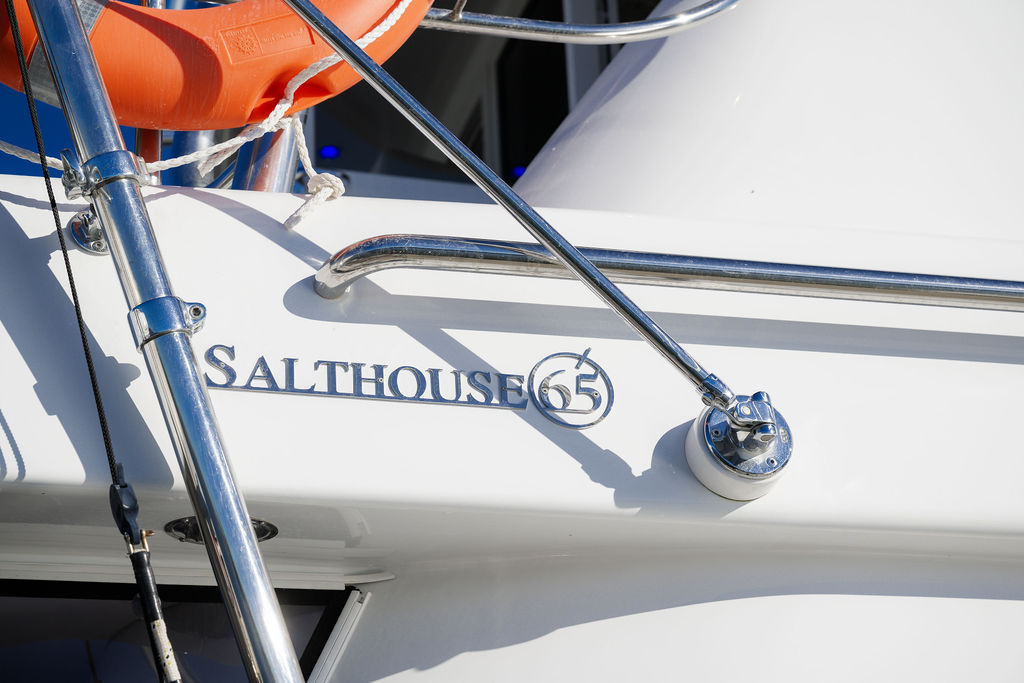
The Salthouse 65 is a luxury motor yacht built by the renowned New Zealand boatbuilder Salthouse, named for its 65 foot hull. Designed as a long-range passagemaker and family motor yacht, it combines practicality, comfort and capability in a hull built for serious time on the water.
Framed Windows Compared With Direct Glazing
In a framed window, the glass sits inside a separate frame that is fastened to the superstructure, and the frame stays visible around every pane. In direct glazing, the glass is bonded straight to the vessel’s structure with a marine glazing adhesive. There is no visible frame, and the glass becomes part of the surface of the boat.
| Framed windows | Direct glazing | |
|---|---|---|
| Appearance | Black frames visible around each pane and between sections | Clean, continuous glass with no visible frame |
| Glass size | Limited by the frame and its dividing bars | Larger panels across the same opening |
| View | Broken into sections by the frame | A more open, uninterrupted view of the water |
| How it is held | Glass held in a frame fixed to the structure | Glass bonded directly to the structure |
| Look of the vessel | Typical of earlier yacht design | Consistent with contemporary yacht design |
Adhesive manufacturers now describe direct glazing as having become the primary method of installing windows on vessels. Sika, for example, lists benefits including improved design, larger glass areas, a waterproof joint, reduced noise and vibration, and weight savings. It also makes clear that large bonded glass needs its loads calculated properly. That is why a conversion like this is specialist work rather than a straight swap.
The Scope of Work
The project involved replacing a total of 16 windows throughout the vessel. Each window presented its own challenges, with a combination of different sizes, flat panels and curved glass, so no two openings could be treated the same way.
Our scope of work included:
- Protecting the interior and exterior of the vessel before any glass was removed.
- Cutting out and removing the old, damaged window frames and glass.
- Wiring out and preparing each window opening.
- Preparing CAD files and templates for accurate measurement and manufacturing.
- Manufacturing the new glass panels to suit the individual openings.
- Installing the new glazing and completing the caulking for a clean, professional finish.
Removing the Original Frames
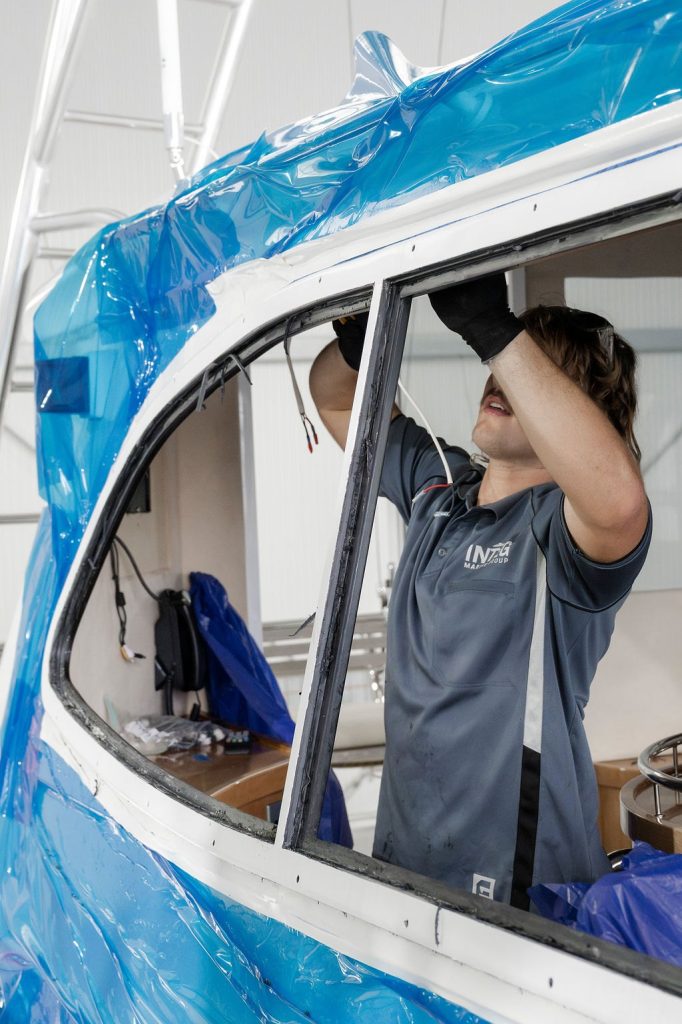
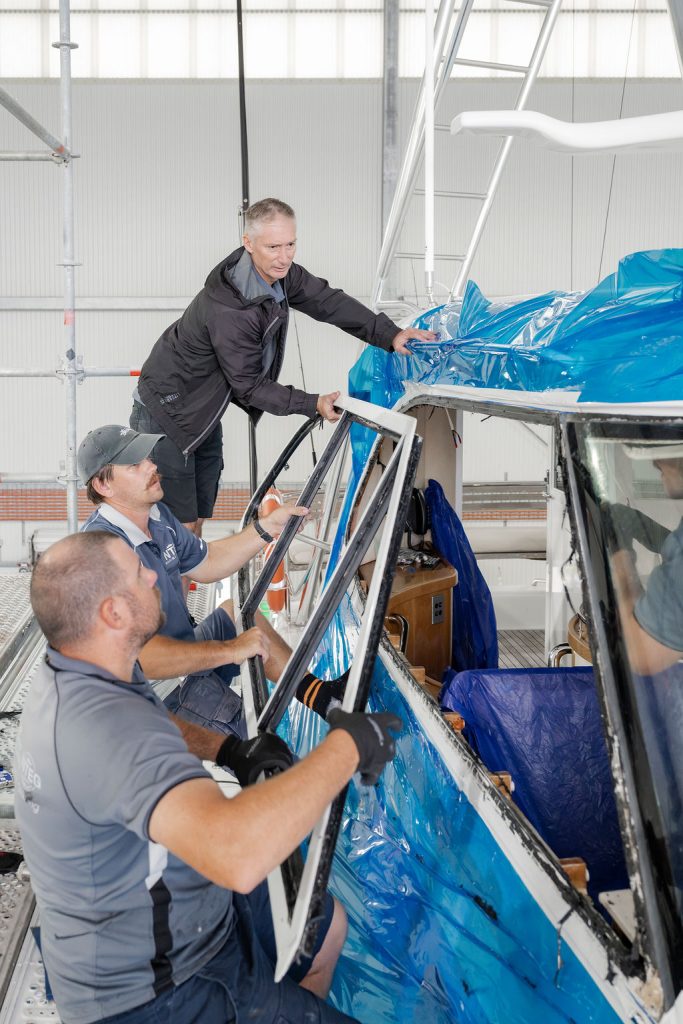
Removal is where a conversion starts to differ from a standard marine window replacement. The old frames and glass were cut out completely, and each opening was prepared to receive bonded glass rather than another frame.
Templating and Manufacturing the New Glass
With the openings exposed, each one was measured and templated, and CAD files were prepared from those templates. Because the windows mixed flat and curved glass in different sizes, accurate templating was what allowed every new panel to be manufactured to fit its own opening. Because our end-to-end approach keeps manufacture and installation within one group, the team templating the openings also answered for the final fit.
Installation and Coordination With Other Trades
The work was completed at The Boat Works on the Gold Coast, close to our Coomera quality control facility. The vessel was out of the water and positioned inside a shed. Due to the size of the vessel, the project also required a large scissor lift and scaffolding to give safe and effective access throughout the installation.
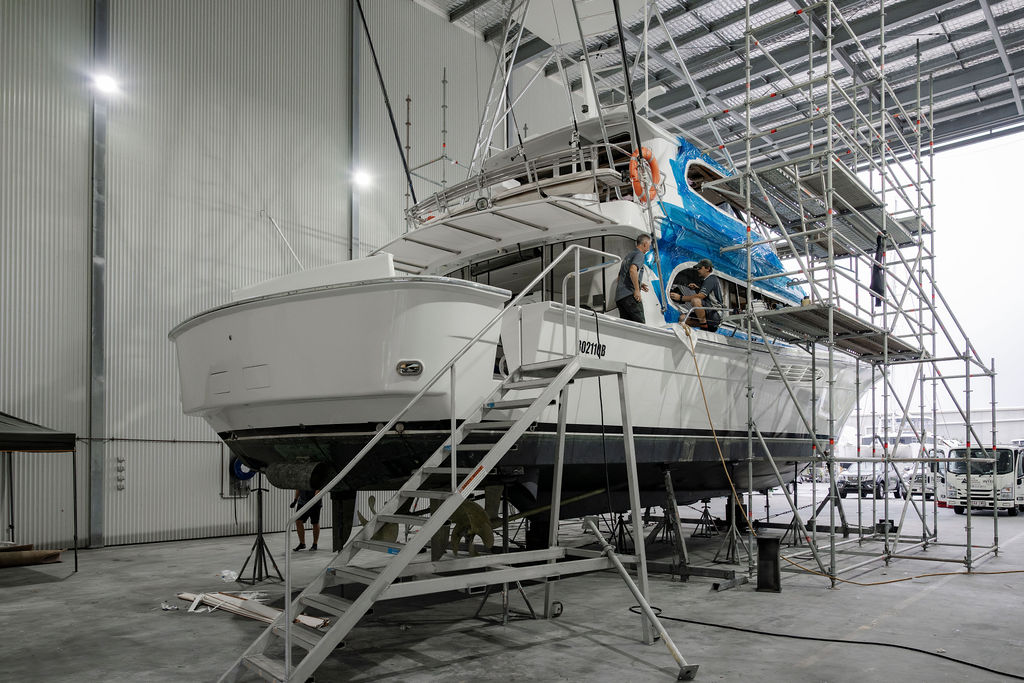
Careful planning and coordination were essential, because the window conversion was only one part of a larger refit. We worked closely with the contractors handling the interior renovation, upholstery and sofa replacement, and the exterior painting. The glazing was sequenced around their work so each trade could keep moving.
The Result
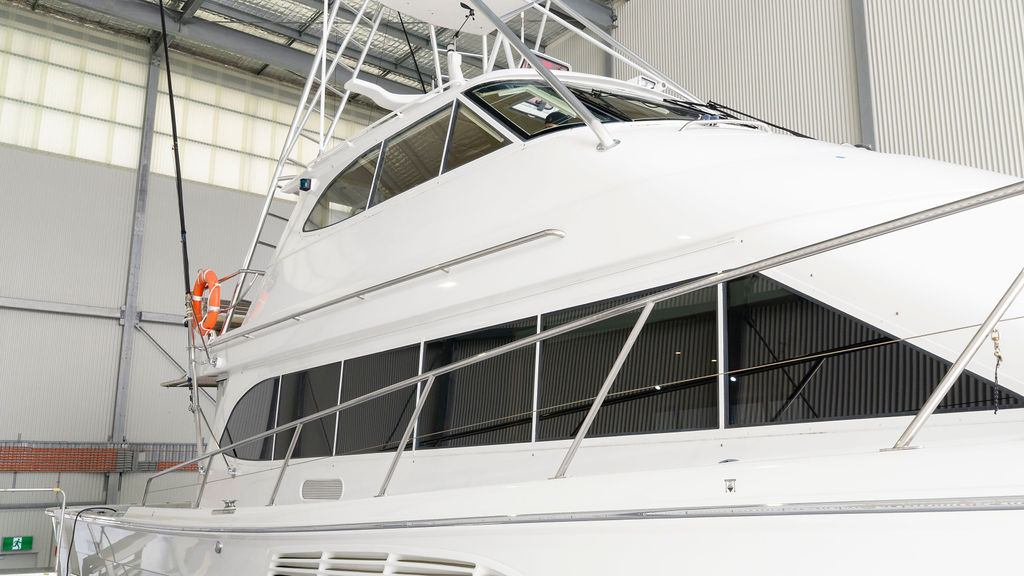
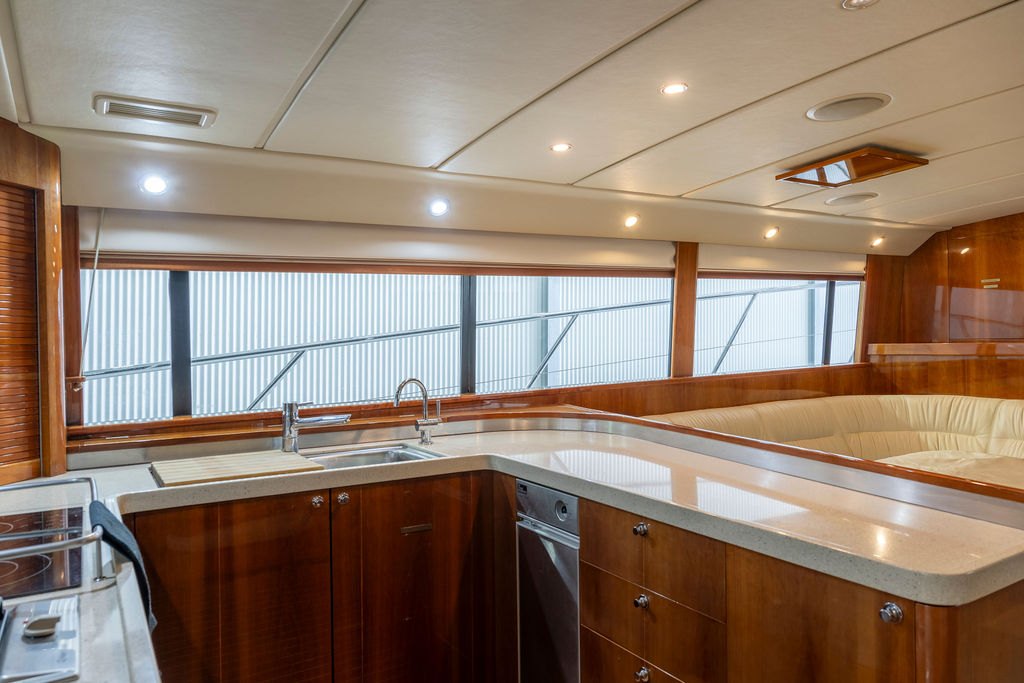
The finished windows run as clean, continuous glass along the side of the Salthouse 65, with no black frames between the panes. From outside, the saloon now reads as one sleek band of glass, and from inside, the view of the water is noticeably larger and more open.
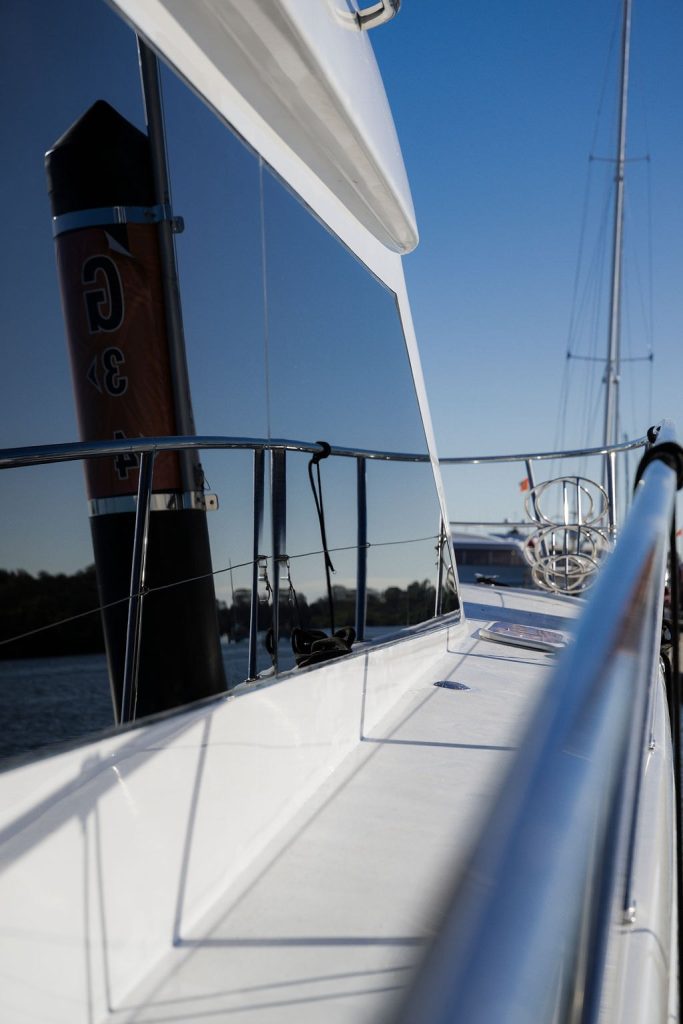
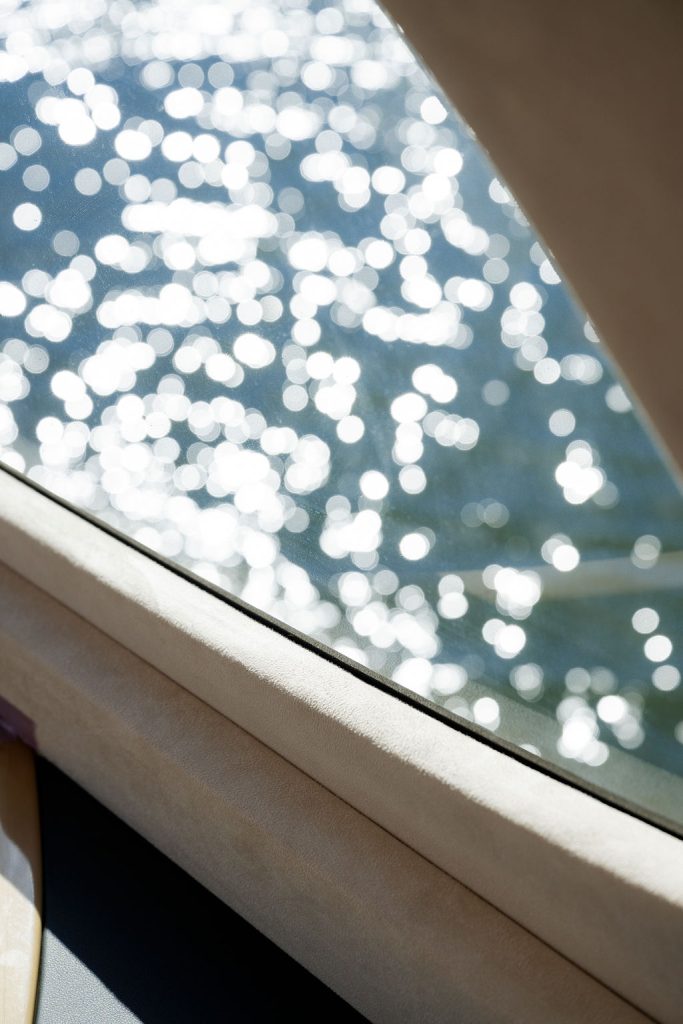
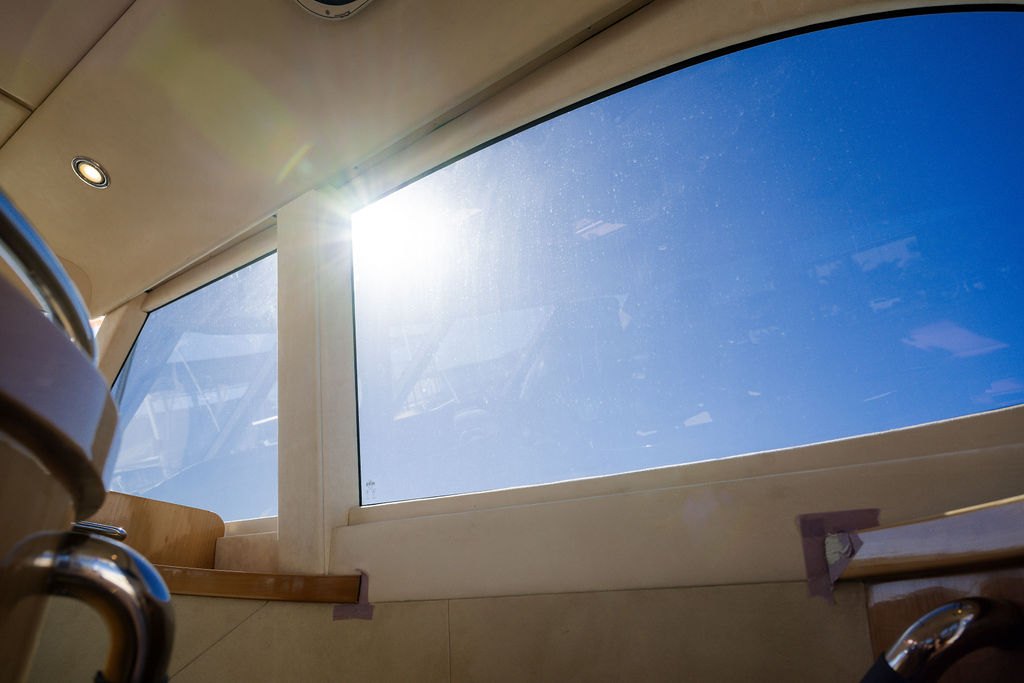
The change is as much about how the boat feels as how it looks. The Salthouse 65 keeps the character of a classic yacht, and its glazing now sits comfortably alongside contemporary vessels in the marina.
What This Project Shows
A framed-to-direct-glazing conversion asks for more than new glass. It depends on accurate templating, glass manufactured for each opening, careful installation and close coordination with every other trade on board. On the Salthouse 65, those pieces came together within one group, from the CAD files through to the final caulking.
For the owners, shipyards and operators we work with, that is the value of handling the whole glazing scope in one place. It is the same approach we bring to large-scale superyacht glazing projects, and to established vessels being brought up to date. Owners considering a similar upgrade are welcome to talk through their vessel with our team.
Frequently Asked Questions
What is direct glazing on a boat?
Direct glazing is a method of installing boat windows where the glass is bonded straight to the vessel’s structure with a marine glazing adhesive, rather than being held in a separate frame. There is no visible frame around the pane, so the glass sits as a clean, continuous surface. Integ Marine Group installed direct glazing on a Salthouse 65 in place of its original framed windows.
Can framed boat windows be converted to direct glazing?
Yes, many framed windows can be converted, as the Salthouse 65 project shows. The original frames and glass are removed, the openings are prepared, and each opening is templated so new glass can be manufactured to fit. Integ Marine Group assesses each vessel’s openings and structure before recommending a conversion.
What are the benefits of direct glazing?
The most visible benefit is appearance, because removing the frames allows larger, continuous glass and a more contemporary look. Adhesive manufacturers also point to a waterproof joint, reduced noise and vibration, and weight savings. For the Salthouse 65, Integ Marine Group’s focus was a more open view of the water and a modern finish that kept the vessel’s character.
Can a window conversion be done during a wider refit?
Yes, and it is often the most efficient time, because the vessel is already out of the water with other trades on board. It does call for careful sequencing, so glazing, interior, upholstery and paint work do not hold each other up. On the Salthouse 65, Integ Marine Group coordinated the window conversion around the interior renovation, upholstery and exterior painting.

